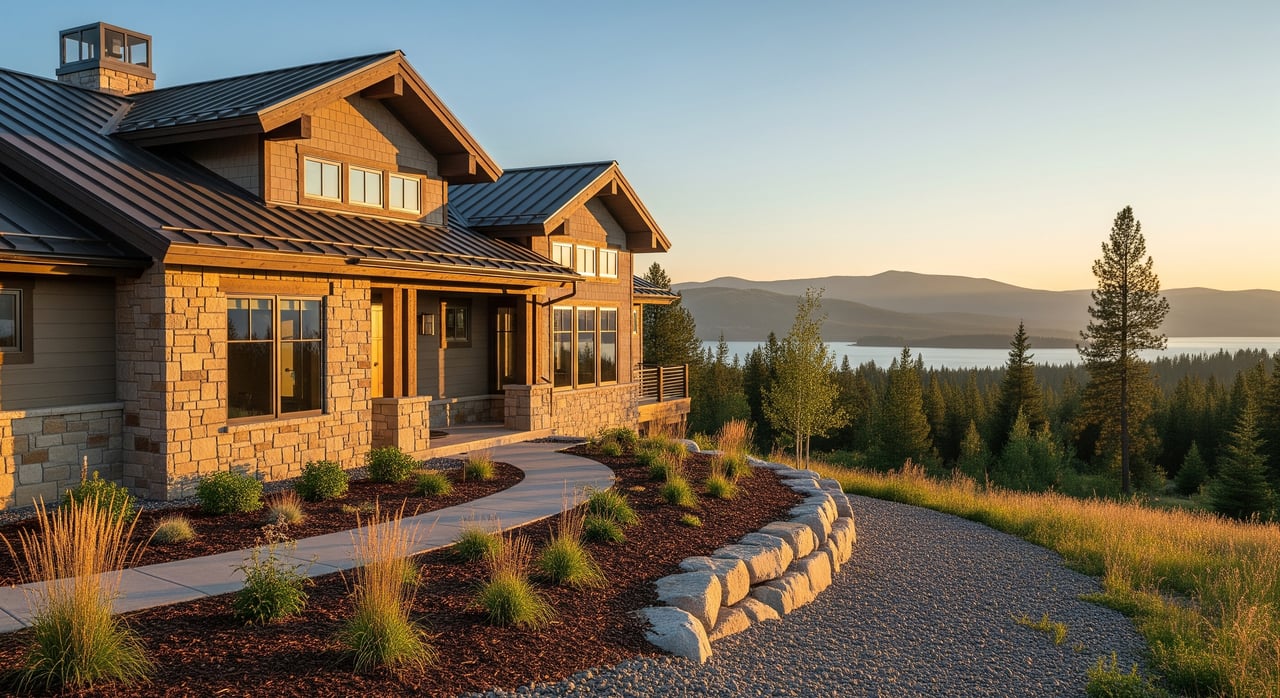
What would you do if wind-driven embers blew across your deck this August? If you own a hillside or treed lot near Schweitzer, that is a real scenario during late summer. You want simple, proven steps that protect your home without giving up the mountain aesthetic you love. In this guide, you will learn how to set up defensible-space zones, choose ember-resistant building details, landscape for steep terrain, and follow a practical spring and fall checklist tailored to Sandpoint’s wildland-urban interface. Let’s dive in.
Why Schweitzer homes face wildfire risk
Schweitzer sits in mixed conifer forest with fir, Douglas-fir, and pine, plus seasonal grasses and shrubs. In late summer and early fall, these fuels can dry out, and fire behavior can be fast and uphill on steep terrain. Homes near continuous forest are exposed to radiant heat, direct flame, and ember showers.
Many WUI ignitions happen when embers find weak points such as decks, vents, eaves, and gutters. The combination of slope, wind, and dry fuels means even small ember landings can matter. Always confirm any HOA or resort rules, and coordinate with Bonner County and your local fire district for site-specific guidance.
Defensible space by zone
Organize your work around the Home Ignition Zone, from the structure out to the broader property. Focus first on the area closest to the house.
Zone A: Immediate 0–5 ft
Objective: Eliminate flame contact and remove easy ember targets right next to the home.
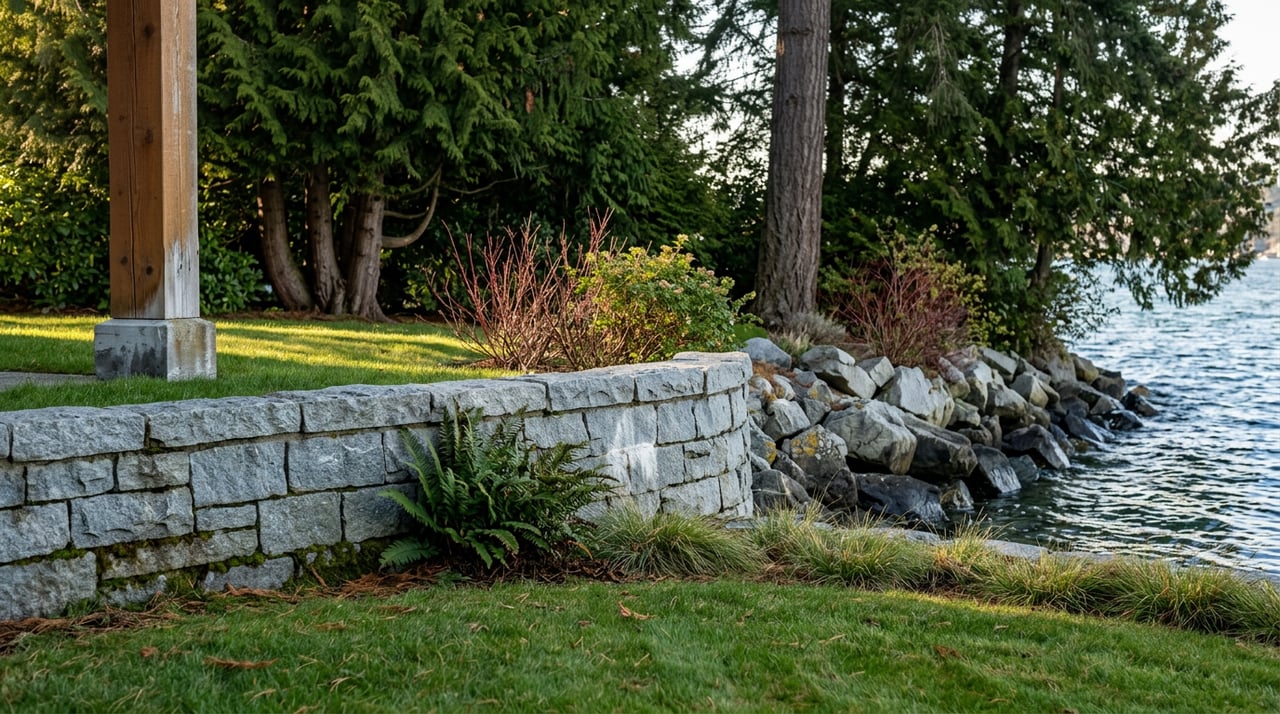
- Use noncombustible surfaces next to foundations, such as rock, stone, concrete, or pavers.
- Do not allow combustible mulch or woody debris to touch siding. If you use mulch, choose mineral or other noncombustible options in the first few feet.
- Move firewood, stacked lumber, propane tanks, cushions, and planters at least 30 ft from the house or store them in a noncombustible enclosure.
- Enclose or screen crawlspaces and under-deck areas with corrosion-resistant metal screening.
Zone B: Near 5–30 ft
Objective: Reduce fuels that carry flames to the structure and limit ember buildup.
- Keep the area lean, clean, and green. Use irrigated, low-fuel plantings and space trees and shrubs.
- Mow lawns short. Remove dead vegetation and ladder fuels, including small trees or shrubs under larger trees.
- Keep small fuel sources and wood piles outside this zone.
- Prune tree limbs to create 6–10 ft of clearance above ground. Remove branches within 10 ft of chimneys.
Zone C: Extended 30–100+ ft
Objective: Slow and soften an approaching fire while limiting spot fires from embers.
- Thin trees to reduce continuous crowns and remove small conifers beneath taller trees.
- Create breaks between tree crowns and plant groups to disrupt fire spread.
- Maintain defensible space to at least 100 ft where the lot allows. On steeper slopes, extend even farther upslope.
- Keep grasses mowed and remove heavy, continuous brush.
Steep slope adjustments
Fire moves faster uphill and produces more radiant heat on slopes. If your home is on or below a slope, apply larger clearances upslope from the house. Many agencies suggest pushing defensible space to 100 ft or more in steep sections. Ask your local fire district for site-specific distances.
Ember-resistant upgrades that matter
Embers are the most common way homes ignite in WUI fires. Close ember pathways and harden the parts of the home that fail first.
Roofs and gutters
- Choose a Class A roof where practical, such as asphalt fiberglass shingles with a Class A rating, metal, or tile.
- Clear gutters, roof valleys, and downspouts each season. Consider noncombustible gutter covers that block debris and allow water flow.
- Clean roof valleys and edges where embers collect behind flashing.
Vents, soffits, and eaves
- Cover attic, foundation, and under-floor vents with corrosion-resistant metal mesh. Use 1/8 inch mesh where required by local guidance or code.
- Enclose soffits and reduce open eave cavities so embers have fewer entry points.
Siding and exterior walls
- Favor noncombustible or ignition-resistant cladding where budget allows, such as fiber cement, stucco, brick, metal, or treated masonry.
- Maintain siding by sealing gaps and trimming areas where embers can settle. Avoid combustible siding in contact with mulch at ground level.
Decks, porches, and attachments
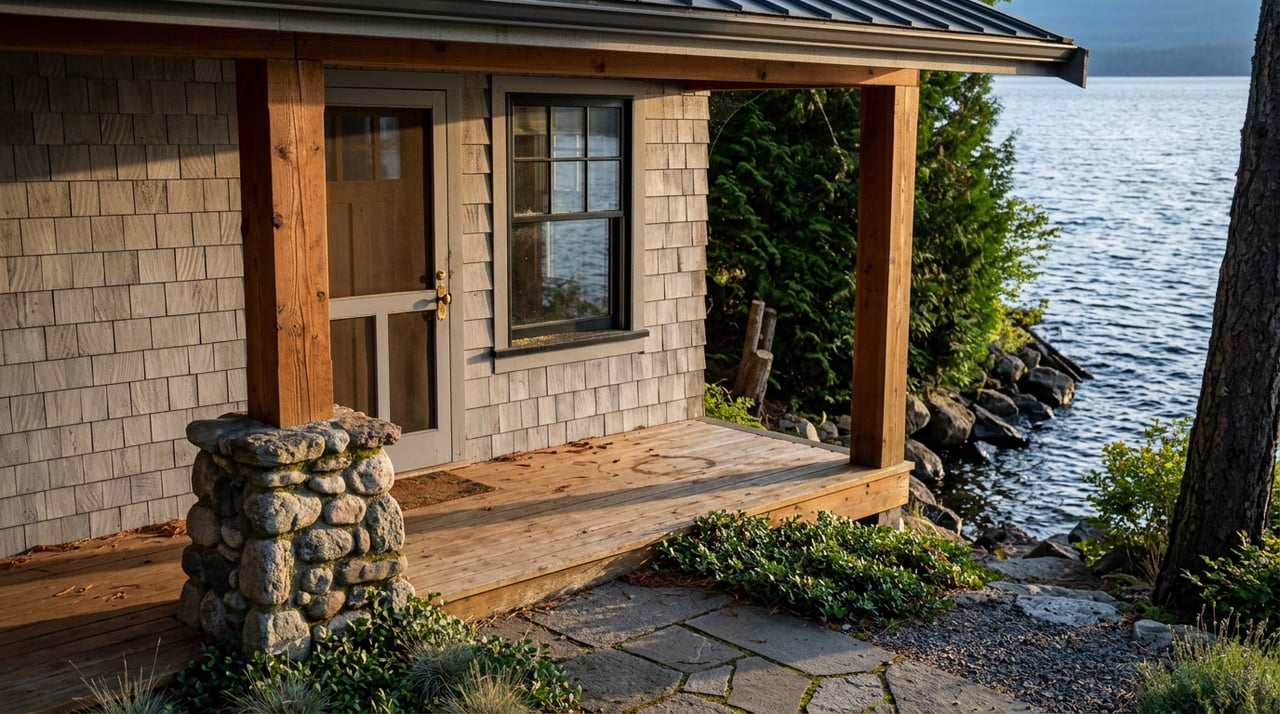
- Consider noncombustible decking like concrete, stone, select composites, or metal systems, or at least enclose the underside with ignition-resistant materials.
- Keep firewood, cushions, and planters off decks or protect them in noncombustible storage.
- Screen the under-deck area with metal mesh and remove debris regularly.
Windows and doors
- Use dual-pane windows with a tempered exterior pane to resist heat longer. Large windows are more vulnerable, so reduce exposure on high-risk elevations or add shutters.
- Choose solid core or metal-clad exterior doors. Keep weather stripping and thresholds in good repair.
Chimneys and stovepipes
- Install spark arrestors and rated screens. Clean chimneys before fire season.
Prioritize and budget
If you cannot do everything at once, start with the roof, vents, and the 0–5 ft immediate zone. These upgrades offer strong risk reduction and can be done incrementally over time.
Landscaping for steep, forested lots
You can balance a mountain look with smart spacing, lower-fuel plants, and erosion control.
Design principles
- Keep noncombustible hardscape near the house and thin forest fuels higher on slope.
- Favor deciduous trees and low-resin shrubs close to the home, since they tend to be less flammable than conifers.
- Group plants in small islands separated by rock or paths to break continuity.
- Remove ladder fuels by separating groundcovers and shrubs from low tree branches.
Plant choices near the home
- Select plants with low resin content and low dead-leaf buildup.
- Keep nearest plants low-growing and well spaced, and use irrigation to maintain moisture through the dry months.
- Avoid dense junipers and highly resinous evergreens in Zones A and B.
- Validate species for Schweitzer’s elevation and winter hardiness with local extension or nurseries.
Hardscape and access
- Use rock, gravel, paving, or irrigated lawn within the near zones to reduce ignition and create firefighter access.
- Design driveways and paths as fuel breaks. Maintain clear address signage and turnarounds where possible.
- On steep slopes, use terraces, retaining features, and strategic thinning to control both fire intensity and erosion.
Irrigation and water
- Maintain irrigation systems to keep near-house vegetation green during dry months, within local water rules.
- Ensure an accessible water source or coordinate with your local fire district if voluntary defense resources are available.
Erosion after thinning
- When removing vegetation on slopes, plan erosion control using wattles, erosion matting, or seeding with appropriate native grasses to protect soils during spring runoff.
Seasonal checklist for Schweitzer homeowners
Use this calendar as a baseline and adjust for your site. Many items are worth monitoring monthly during fire season.
Spring: April to June
- Roof and gutters: Clear needles and debris. Inspect shingles, flashing, and vents for gaps.
- Immediate zone 0–5 ft: Remove winter debris and replace combustible mulch with mineral or other noncombustible options. Move combustibles 30 ft away.
- Landscaping: Prune trees to 6–10 ft above ground and remove ladder fuels. Thin shrubs and create spacing between crowns. Mow grasses and remove dead annuals. Test and repair irrigation.
- Vents and under-decks: Inspect and upgrade to metal mesh screens as needed. Clear debris under decks and around vents.
- Chimney and woodstoves: Clean and inspect before peak use.
- Supplies: Check hoses, fill portable tanks, and test pumps or generators.
- Documentation: Update parcel map, evacuation plan, and local fire district contacts.
Summer: ongoing during peak risk
- Clear dead vegetation and storm debris. Maintain mower height.
- Watch for beetle-killed or diseased trees and remove them per local guidance.
Fall: before winter
- Roof and gutters: Do a final clean before snow.
- Trees and shrubs: Remove dead branches and downed wood. Prune as needed.
- Equipment: Secure outdoor furniture. Winterize irrigation while keeping near-house plantings watered if it is dry.
- Review: Assess this year’s work and schedule larger projects, such as roof upgrades or major thinning, for the off-season.
- Community: Join neighborhood Firewise assessments or coordinate group thinning with neighbors and local fire authorities.
After a nearby wildfire or prescribed burn
- Inspect for ember deposits on the roof, gutters, and around vents, and remove them immediately.
- Check HVAC intakes and replace filters if smoke was heavy.
- Watch for erosion or runoff hazards where vegetation was removed or burned.
Neighborhood coordination and readiness
Wildfire mitigation is stronger when neighbors act together. Consider starting or joining a Firewise USA community. Coordinate with the local fire district and Bonner County emergency management for defensible-space recommendations, burn rules, and evacuation thresholds. Review your homeowners insurance for wildfire requirements and coverage. For steep or complex parcels, a professional defensible-space assessment can help you prioritize work.
Considering a move in the WUI
If you plan to buy or sell a mountain home near Schweitzer, you want to understand WUI risk and the cost and timeline of practical upgrades. As Sandpoint-based advisors, we help you evaluate a property’s exposure, spot high-impact improvements, and connect with local resources so you can move forward with confidence. Ready to talk through your plans and timelines? Discover Your North Idaho Lifestyle with Overland Reizen.
FAQs
What is the Home Ignition Zone for Schweitzer homes?
- It is the area from the structure out to at least 100 ft where you reduce fuels and ember pathways, with the most critical work in the immediate 0–5 ft next to the house.
How far should defensible space extend on steep lots?
- Maintain at least 100 ft where possible and extend farther upslope, since fire moves faster uphill and produces more radiant heat.
Which roof and vent details reduce ember risk most?
- A Class A roof, clean gutters, and 1/8 inch metal mesh on attic and foundation vents are high-impact upgrades that block common ember entry points.
What materials are safer for decks in the WUI?
- Noncombustible decking like concrete, stone, select composites, or metal systems, plus enclosed or screened under-deck areas, lower ignition risk.
Which plants are better near Schweitzer homes?
- Choose low-resin, low-debris plants kept low and well spaced, favor deciduous species near the house, and avoid dense junipers in the first 30 ft.
How often should I clear needles and debris in fire season?
- Check monthly during peak risk and after wind events, focusing on roofs, gutters, roof valleys, decks, and around vents.
Do HOAs or local rules affect defensible space near Sandpoint?
- They can, so confirm requirements with your HOA or resort management and coordinate distances and treatments with Bonner County and your local fire district.