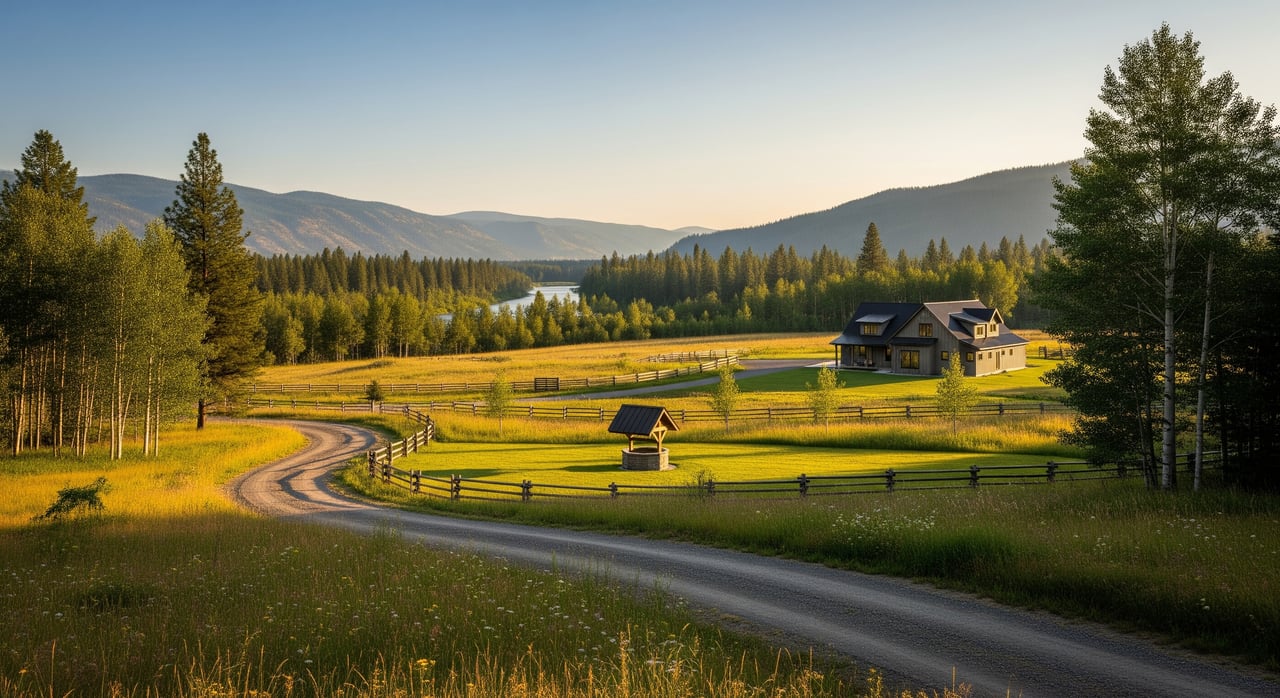
Looking for room to breathe near Bonners Ferry? Acreage in Boundary County offers forested privacy, river benches, and big mountain views, but the right property comes down to three things: access, water, and value. If you want a place for a primary home, a weekend basecamp, or a long-term hold, you need a plan to verify each one. This guide gives you the local playbook so you can buy with confidence and avoid expensive surprises. Let’s dive in.
Why Bonners Ferry acreage appeals
You can find everything from small hobby farms close to town to large tracts that back up to public land. Many buyers want space for a custom home, a shop, or four-season recreation like hunting and snowmobiling. Others look for timber potential or a legacy property. Whatever your goal, you protect your investment by checking how you reach the land, how you get water, and what truly drives the price.
Access basics in Boundary County
Access affects daily life, financing, insurance, and resale. Properties on county or state roads often have year-round plowing and fewer unknowns. Parcels on private roads or forest service routes can be excellent, but you must confirm legal rights to travel, who maintains the road, and how it holds up in winter.
Types of access you will see
- Public roads: County or state roads that are typically maintained and plowed. Confirm classification with the county before you assume service.
- Private roads and driveways: Maintenance may be handled by a formal agreement, HOA, or a handshake that can change. You need documented terms.
- Easements: Recorded road easements are ideal. Some parcels rely on prescriptive or unrecorded paths that can be risky.
Common risks to watch
Landlocked or unclear access can delay or kill a deal. Vague or missing road maintenance agreements can lead to disputes and big costs for grading, gravel, and snow removal. Seasonal closures may affect routes across public land and higher elevation roads with heavy snow.
If access crosses federal land, confirm seasonal rules with the U.S. Forest Service and the Bureau of Land Management. For parcels that tie into state highways, review approach and safety requirements with the Idaho Transportation Department.
How to verify access the right way
- Pull title and look for recorded road easements and rights-of-way. Ask your title officer to point to the document and legal description.
- Request a current survey or a boundary map that shows the access route.
- Get copies of private road or HOA maintenance agreements with cost-sharing terms.
- Visit in more than one season if possible. Check grades, drainage, and winter plow plans.
- Confirm whether any route uses federal or state roads and whether closures or permits apply.
Wells and water in Boundary County
Most rural acreage depends on a private well. Groundwater in North Idaho varies by geology, depth, and season, so you should verify both yield and quality rather than rely on a seller’s memory or a short test. Good water is a major value driver. Lack of it can reduce property value dramatically.
Records and permits to check
The Idaho Department of Water Resources is your primary source for well and water-right data. Search nearby logs and water-right records to understand depth, construction, and historical production.
- Review nearby and on-site wells using the IDWR well logs.
- Confirm allowed uses, irrigation rights, and priority through the IDWR water-rights search.
These records help you decide if a new well is likely to be deep and expensive, or if an existing well matches your needs.
Proving yield and water quality
Ask for well logs and pump details, then schedule independent testing. A short run-up test can be misleading, so plan a longer pump test.
- Pump test: Aim for 6 to 24 hours to measure sustainable yield and drawdown.
- Water-quality panel: Minimum testing should include total coliform, E. coli, nitrate, pH, hardness, iron, and manganese. Consider arsenic and uranium if local geology suggests risk.
- Seasonal check: Late summer and fall can show the low point for both yield and water chemistry.
For health standards and best practices, review the Idaho Department of Environmental Quality. If results are borderline, consult a licensed well driller or hydrogeologist for options on rehabilitation or a new well site.
Irrigation and surface water
If you plan to irrigate pasture or run livestock watering from surface sources, verify that rights exist and can transfer. Use the IDWR database to confirm water-right type and priority and ask about ditch associations or fees. The correct paperwork protects your use and your resale.
Septic, soils, and site constraints
A septic system must match your soil and groundwater conditions. Many rural parcels are fine with conventional systems. Others need engineered designs because of shallow soils, high water tables, or bedrock.
Septic suitability and soils
Before you close, secure a soil evaluation or confirm an existing permitted system. The NRCS Web Soil Survey helps you screen for limitations like steep slopes, shallow bedrock, or poor drainage. Pair mapping with on-the-ground testing by a licensed septic designer or soil scientist.
Floodplains, wetlands, and habitat
Verify whether the parcel overlaps a mapped floodplain using the FEMA Flood Map Service Center. Review potential wetlands with the U.S. Fish & Wildlife Service National Wetlands Inventory. These factors can guide home placement, driveways, and permitting timelines.
What drives value here
Acreage pricing in Boundary County reflects how easily you can reach it, how reliably you can supply water, and how well the land supports your plan.
Location, topography, and recreation
Parcels closer to Bonners Ferry and services often trade at a premium. Usable topography, good sun, and views can increase appeal. Adjacency to public land can boost recreational value, but confirm access rights and seasonal rules.
Utilities, wildfire, and buildability
Power, phone, and broadband proximity reduces your cost to build. If lines are far away, plan for extension costs. Wildfire exposure and defensible space can affect insurance and marketability. Local fire districts and the Idaho Department of Lands share mitigation resources and, at times, cost-share programs.
Taxes and assessments
Property taxes are set by the county assessor and may not match market value. Some parcels have special assessments for road maintenance, ditch associations, or fire districts. Verify current taxes, any exemptions, and all recurring fees during due diligence.
Your buyer due-diligence checklist
- Title and access
- Pull a preliminary title report. Confirm recorded access easements and right-of-way descriptions.
- Ask for a recent survey or boundary map that shows the access route.
- Obtain any private road or HOA maintenance agreements with cost-share details.
- Water and wells
- Search IDWR well logs for the parcel and neighbors.
- Verify uses and priority through the IDWR water-rights search.
- Require a professional well inspection, a 6 to 24 hour pump test, and potable water-quality testing.
- Septic and soils
- Order a soils evaluation and septic design, or verify an existing permitted system.
- Screen the site in the NRCS Web Soil Survey for limitations.
- Environmental and hazards
- Check flood status at the FEMA Flood Map Service Center.
- Review wetlands via the National Wetlands Inventory.
- Confirm wildfire protection details with the local fire district and plan for defensible space.
- Roads and seasons
- Walk and drive the access route in different seasons if possible.
- If crossing public land, confirm seasonal rules with the U.S. Forest Service and the Bureau of Land Management.
- For highway approaches, review requirements with the Idaho Transportation Department.
- Utilities and broadband
- Contact providers to confirm line location, capacity, and extension costs.
- If service is limited, plan alternatives like propane, satellite internet, or fixed wireless.
- Pricing and carrying costs
- Review county tax records, special assessments, and expected road, snow, and fuel reduction costs.
What sellers should prepare
- Gather well documentation: logs, pump details, permits, and any recent water-quality tests.
- Provide septic permits, design drawings, and maintenance records.
- Share road and maintenance agreements, HOA covenants, and any special assessments.
- List utility providers and any line extension or hookup information.
- Note timber work or wildfire mitigation you have completed and keep receipts.
- Flag any recorded restrictions such as conservation easements or deed conditions.
How we help you buy with confidence
Buying acreage in Boundary County rewards careful verification. You get the lifestyle you want when access is legal and dependable, water is proven, and the land supports your plan. Our team pairs local knowledge with meticulous transaction management so you can move from search to closing with clarity.
If you are ready to explore parcels near Bonners Ferry, reach out to Overland Reizen. We build custom tours, coordinate testing, and help you evaluate true land value so you can make a confident offer.
FAQs
What should I check first when buying acreage near Bonners Ferry?
- Start with legal access and water. Confirm recorded road easements in title and verify well yield and quality with an independent pump test and lab panel.
How do I research a property’s well in Boundary County?
- Use the IDWR well logs to review nearby depths and production, then schedule a professional well inspection and pump test before you remove contingencies.
Are seasonal road closures common on rural parcels?
- Yes. Routes across public lands can close seasonally. Confirm timing and rules with the U.S. Forest Service or Bureau of Land Management before you commit.
What water-quality tests should I run on a private well?
- At minimum test for total coliform, E. coli, nitrate, pH, hardness, iron, and manganese, and consider arsenic or uranium depending on geology and local guidance from the Idaho Department of Environmental Quality.
How can I screen soils and flood risk on a rural parcel?
- Review soils in the NRCS Web Soil Survey and check flood status at the FEMA Flood Map Service Center to guide building sites and permit planning.
Where can I learn more about groundwater in North Idaho?
- The U.S. Geological Survey publishes regional groundwater studies that can help you understand aquifers, recharge, and seasonal variability.